
Real España FC – History, Honours & Club Profile in Honduras
The Machine from San Pedro Sula
12 Liga Nacional titles. Royal status granted by a king. The most decorated club in northern Honduras.
Real Club Deportivo España stands as one of the most historically significant football institutions in Central America. Based in San Pedro Sula – the industrial capital of Honduras – the club has spent nearly a century accumulating silverware, producing legendary players, and cementing a rivalry culture that defines the passion of Honduran football. With 12 national championships to their name and a royal designation formally granted by a reigning European monarch, Real España occupies a unique and celebrated place in the sport’s history across the region.
Club History
Origins at Escuela Ramón Rosa
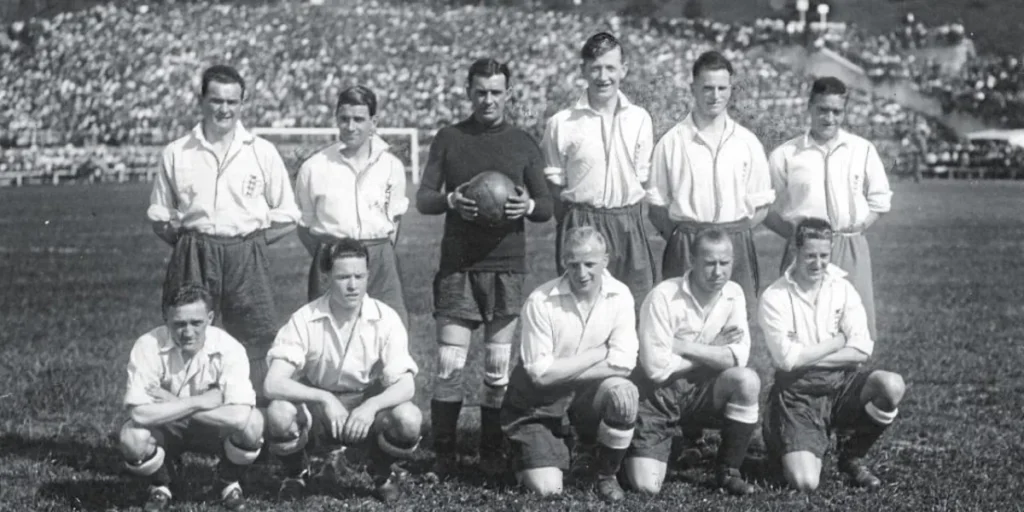
Real España was founded on 14 July 1929 at Escuela Ramón Rosa in San Pedro Sula by a group of six individuals: Pastor Reyes, Erick Mejía Handal, Juan Banegas, “Teco” Lardizábal, Hugo Escoto Soto, and Leonardo Muñoz. The club was originally established simply as Club Deportivo España, taking its name from the Spanish homeland that many residents of San Pedro Sula at the time traced their cultural heritage to. The city of San Pedro Sula – nestled in the Sula Valley in northwestern Honduras – was already growing into an economic powerhouse by the late 1920s, and the formation of a football club reflected the city’s broader ambitions and civic pride. From its earliest years, España was more than a sports team; it was a community institution that drew together the varied strands of San Pedro Sula’s social fabric.
The club’s early decades were spent building a foundation in informal and regional competitions. Honduras did not establish a fully professional national football league until 1965, meaning that España’s first 36 years were spent competing in amateur and semi-professional environments. When the Liga Nacional de Fútbol Profesional de Honduras was finally inaugurated, España was one of its founding members. Their first match in the national professional league took place on 18 July 1965 – a 1-0 victory over Troya – making them one of the original participants in organised Honduran professional football from its very first day. For most of the league’s opening decade, however, Los Aurinegros remained a mid-table side, competitive but not yet dominant.
The Golden Era: 1974-1980
The transformation that turned España into champions began in the early 1970s with the arrival of key personnel. Defender Jaime Villegas, who would go on to make a club-record 306 appearances between 1970 and 1986, became the defensive anchor of the side. In 1974, the additions of goalkeeper Julio César Arzú and striker Jimmy James Bailey elevated the squad to title-contending status for the first time. España finished third in the regular season that year but won the quadrangular playoff phase, then defeated Motagua 1-0 in the championship final – Antonio Pavón Molina scoring the only goal – to claim their first-ever Liga Nacional title. The city of San Pedro Sula celebrated wildly; the club had finally arrived on the national stage.
The years that followed saw España grow into an unstoppable force. In 1975, the arrival of defensive midfielder Gilberto Yearwood – who would later be recognised as one of the greatest Honduran players of all time – added another dimension to the squad. España won their second consecutive title that year, defeating Olimpia 2-0 in the second leg of the championship playoff. Then came 1976, and with it history: España won the regular season championship outright with 38 points from 27 matches, and after a 0-0 draw in Tegucigalpa, they destroyed their opponents 4-1 at home in San Pedro Sula to claim their third straight title. It was the first “Tricampeón” in Honduran football history – a record that would not be equalled until Olimpia achieved the same feat in the late 1990s.
Royal Recognition and International Standing
The three consecutive championships brought España international attention for the first time, and that attention came from the highest levels. Gilberto Yearwood, who had starred in the 1977 FIFA World Youth Championship for Honduras, departed to spend a decade in Spain’s La Liga, becoming a symbol of Honduras’s growing football talent. More significantly, in 1977, His Majesty King Juan Carlos I of Spain formally honoured the club by accepting the Honorary Presidency of the institution for life, and bestowed upon the club the title of “Real” – the Spanish word for “Royal.” This was reportedly the first time the Spanish monarch had granted such a distinction to any football club in the American continent, a remarkable honour that placed España alongside European royal-designated clubs like Real Madrid, Real Sociedad, Real Betis, and Real Zaragoza. The crown that appears on the club’s badge to this day is a direct symbol of that royal recognition.
Decades of Competition: 1980-2017
España added their fourth title in 1980 under dramatic circumstances, winning a decisive three-way playoff match against Marathon 2-1 with all of San Pedro Sula watching. The golden era of that generation then gave way to a more competitive period, as Olimpia rose to dominance in Honduran football during the early 1980s. España experienced relative drought through the mid-1980s, but revived in 1988 by defeating Olimpia in extra time to claim a fifth title, and then won a sixth in the 1990-91 season, defeating Motagua 2-1 in the final. In 1993-94, the club produced perhaps their most dominant league campaign of all, winning both the regular season and the triangular playoff outright – losing just once in 31 domestic matches – to claim their seventh title, led by a teenage Carlos Pavón.
After a prolonged drought of nearly a decade, España returned to the summit in the Apertura 2003 tournament, defeating Olimpia 4-2 on aggregate in the championship final. The ninth title came in the Clausura 2007 in dramatic fashion: trailing on aggregate with 13 minutes remaining against Marathon, Milton Núñez equalised and then set up Brazilian striker Esvaldo Ferreira for the winning goal. The 10th title followed in Apertura 2010, the 11th in Apertura 2013, and the 12th in Apertura 2017, confirming España’s status as a perennial force in Honduran football regardless of the era.
What Makes Real España Stand Out
Real España’s standing in Honduran football is defined not only by their trophy count but by their cultural and civic importance to San Pedro Sula. As the industrial capital’s most prominent club, España has historically represented the aspirations of an entire city – a city that sees itself as distinct from the political capital Tegucigalpa, and that takes particular pride in its own sporting identity. The two great San Pedro Sula clubs, España and Marathon, compete in El Clásico Sampedrano, a derby that is played at least four times per year in the Liga Nacional and constitutes one of the most intensely contested local rivalries in all of Central American football. The proximity of the clubs – both based in the same city, drawing from the same streets and neighbourhoods – gives this fixture an emotional charge that few derbies anywhere can match.
Beyond the local rivalry, España also features in two other major fixtures: El Clásico Moderno against Olimpia, and the España-Motagua classic, which carries a somewhat different, more measured tone given the historically positive relationship between the two clubs. España’s position as one of the “four greats” of Honduran football – alongside Olimpia, Marathon, and Motagua – means that every fixture they play carries elevated significance. When España and Olimpia meet, the result is felt across the entire country. This national weight is something that smaller clubs cannot claim, and it speaks to España’s role not merely as a regional club but as a truly national institution.
The club’s connection to Spanish royalty also sets it apart from virtually every other football institution in the Americas. The 1977 royal recognition by King Juan Carlos I was not a marketing exercise; it was a formal act of distinction that permanently elevated the club’s identity and provided the “Real” designation that precedes the club name to this day. Wearing the crown on the badge is a reminder that España’s ambitions have always extended beyond the borders of Honduras, and that the club has attracted recognition from the broader Spanish-speaking world – a distinction that resonates with the city’s cultural character and its large population of Spanish-heritage residents.
Honours and Achievements
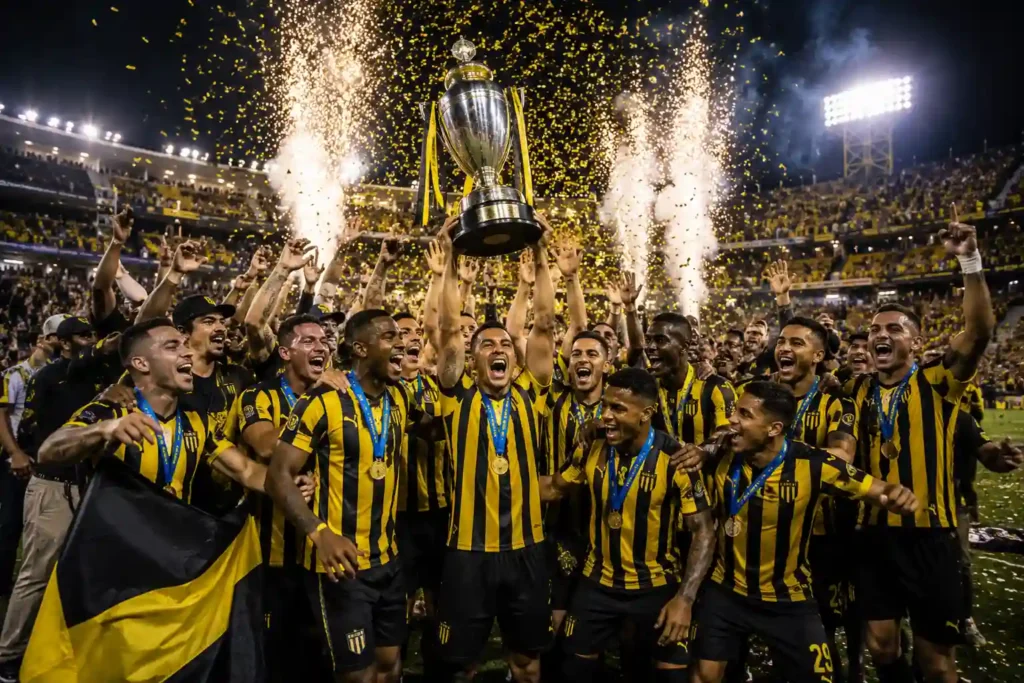
Liga Nacional de Fútbol Profesional de Honduras – 12 titles:
- 1973-74
- 1974-75
- 1975-76
- 1980
- 1987-88
- 1990-91
- 1993-94
- Apertura 2003
- Clausura 2006-07
- Apertura 2010
- Apertura 2013
- Apertura 2017
Additional distinctions:
- First club in Honduran football history to win three consecutive national championships (Tricampeón: 1974, 1975, 1976)
- Royal designation “Real” granted by King Juan Carlos I of Spain in 1977 – the first such honour bestowed on any American football club by the Spanish monarchy
- Participants in CONCACAF club competitions across multiple decades
- Central American championship titles in 1980, 1981, and 1982 alongside other Honduran clubs in regional competition
Home Ground
Estadio General Francisco Morazán
The Estadio General Francisco Morazán is Real España’s home ground and has served as the club’s primary venue since the early decades of organised football in San Pedro Sula. Named after Francisco Morazán – one of the most celebrated figures in Central American history, a military leader and statesman who championed Central American unification in the nineteenth century – the stadium carries historical weight that goes beyond sport. Its location between the 12th and 14th Avenues in the modern city of San Pedro Sula places it at the geographic and cultural heart of the city, close to hotels, restaurants, and transport links connecting San Pedro Sula to the capital Tegucigalpa and to the port of Puerto Cortés to the north.
In terms of capacity, the stadium holds 18,000 spectators according to FIFA restrictions, while the Football Federation of Honduras recognises a capacity of 21,500. The venue has undergone multiple renovations over the decades, including significant reconstruction following damage sustained in 1974 and improvements to the pitch surface in 2008. As an officially designated FIFA and CONCACAF venue, the Estadio Morazán has hosted not only Liga Nacional matches but also international fixtures including World Cup qualifying matches for Honduras’s senior national team, as well as regional youth tournaments including CONCACAF Under-17 and Under-20 qualifying competitions. The stadium’s central location and historical significance make it one of the most recognisable sporting venues in the country. In 2008, while renovation work was conducted, España temporarily relocated home matches to the larger Estadio Olímpico Metropolitano, demonstrating the logistical flexibility the club has shown in maintaining continuity for its supporters.
Club Culture and Identity
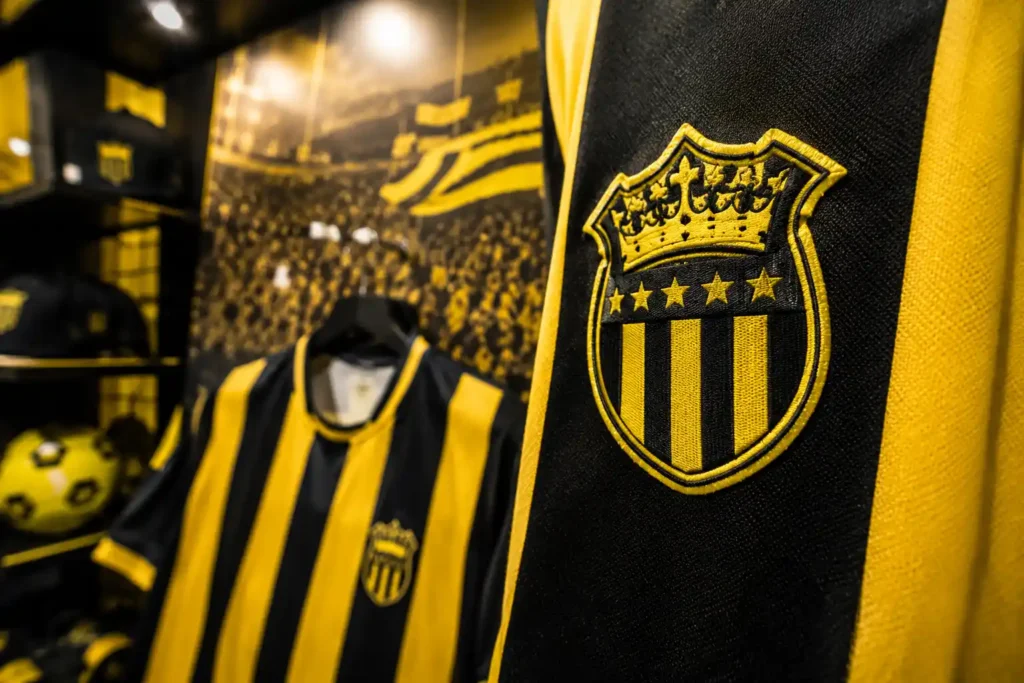
Colours, Symbolism, and the Aurinegros Identity
Real España’s colours are black and yellow – a combination that has given rise to the club’s most widely used nickname, Los Aurinegros, a compound Spanish word meaning “the gold and blacks.” The colours are displayed prominently throughout the club’s visual identity, from the playing kit to the official badge, and they have become synonymous with football from San Pedro Sula in the minds of supporters across Honduras. The club badge features a crown – a direct visual reference to the royal status conferred by King Juan Carlos I in 1977 – which serves as a constant reminder of the distinction that sets España apart from its domestic rivals. The badge itself was updated in 2006 to reflect a more contemporary design, though the core elements of identity – the crown, the colour palette, and the name “Real” – have remained consistent across all iterations of the club’s visual branding.
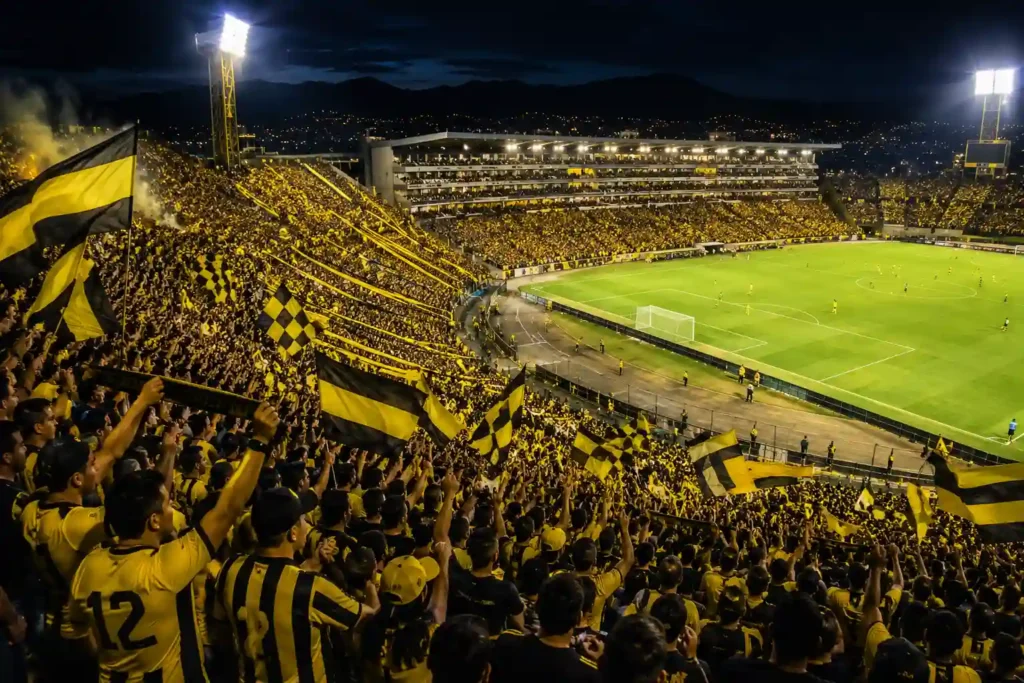
Beyond the colours and the badge, España’s identity is shaped by its nicknames, each of which tells a story about the club’s character at different points in its history. La Máquina – “The Machine” – evokes the relentless, efficient football that the club played during its golden era of the 1970s and 1980s, when titles came in consecutive runs. Los Catedráticos – “The Professors” – suggests an intellectual, calculated approach to the game. La Academia and La Realeza (“The Royalty”) both reinforce the club’s self-image as a club of high standards and distinguished lineage. The club mascot has changed multiple times over the decades – including a yellow and black owl, a train, and most recently a robot – reflecting the club’s willingness to evolve its public image while maintaining its core identity. The fanbase, drawn primarily from San Pedro Sula and the broader Cortés department, is one of the largest and most passionate in Honduras, generating atmospheres at the Estadio Morazán that have become part of the folklore of Honduran football.
The supporter culture around España is deeply embedded in the daily life of San Pedro Sula. Matchdays at the Estadio Morazán bring the city to life, with vendors, flags, chants, and the specific intensity that comes from a club that carries the pride of an entire city. The Clásico Sampedrano against Marathon is treated by locals as the most important fixture in the sporting calendar, and the build-up to those matches creates a palpable sense of occasion throughout the city. España’s role in nurturing young talent – Carlos Pavón being the foremost example – has also created a culture of expectation around the club’s academy, with supporters looking to home-grown players as the truest expressions of what the club represents.
Frequently Asked Questions
In what year was Real España founded?
Real España was founded on 14 July 1929 at Escuela Ramón Rosa in San Pedro Sula, Honduras, by Pastor Reyes, Erick Mejía Handal, Juan Banegas, “Teco” Lardizábal, Hugo Escoto Soto, and Leonardo Muñoz. The club originally bore the name Club Deportivo España and only received the “Real” prefix in 1977.
How many titles has Real España won?
Real España has won 12 Liga Nacional de Fútbol Profesional de Honduras championships. Their titles were won in 1973-74, 1974-75, 1975-76, 1980, 1987-88, 1990-91, 1993-94, Apertura 2003, Clausura 2006-07, Apertura 2010, Apertura 2013, and Apertura 2017. They were also the first club in Honduran football history to win three consecutive championships, achieving the Tricampeón between 1974 and 1976.
What is the name of Real España’s home stadium and what is its capacity?
Real España plays home matches at the Estadio General Francisco Morazán, located in the centre of San Pedro Sula, Honduras. The stadium has an official FIFA capacity of 18,000 spectators, while the Football Federation of Honduras recognises a capacity of 21,500. The venue has hosted Liga Nacional matches, CONCACAF competitions, and Honduran national team World Cup qualifying fixtures.
What are Real España’s club colours?
Real España’s official colours are black and yellow. This combination gives the club its most recognisable nickname, Los Aurinegros – a Spanish compound meaning “the gold and blacks.” The colours are displayed on the club’s playing kit, badge, and all official club materials.
Who is the most famous player in Real España’s history?
Carlos Pavón (Carlos Alberto Pavón Plummer, born 9 October 1973) is widely regarded as the most famous player in Real España’s history and the greatest Honduran footballer of all time. He made over 200 appearances for Los Aurinegros, won four Liga Nacional titles with the club, and is Honduras’s all-time leading international goalscorer with 57 goals in 101 caps. He also represented Honduras at the 2010 FIFA World Cup.